News & updates Update archive News archive Specials Staff Contact us About "TMK" Site FAQ WTMK: Mario Radio Blog Chatroom Message board Mailbag Friends of TMK Wanted 
Arcade Game & Watch Game Boy Advance and e-Reader Game Boy / Color GameCube iQue Mobile NES Nintendo 3DS Nintendo 64 Nintendo DS PC Super NES Switch Switch 2 Virtual Boy Wii Wii U Other platforms Upcoming games Previews Reviews Series Tech demos 
Image archive Sounds & music Fonts Themes & skins 
Mariopedia Cheats/codes Passwords Tips & tricks Maps Game guides & FAQs Bugs/glitches Game credits Interviews Manuals Records Oops! 
Anime Books Sightings Cartoons Commercials & ads CDs and soundtracks DVDs Mario Ice Capades Movies Merchandise 
Saved games Non-commercial ROMs Level editors 
Birdo: Under the Bow DK's Fuzzy History History of Mario Kongtroversy Lost Bytes Mario in Japan The Men Behind Mario Remakes and Ports SMB Complete Guide SMB U.S. Release Date SMB2 Madness Tetris A-Hack Events TMK Birthdays 
Fan films Sheet music Guitar tabs Quotes Links |
Mario games, like many others, are almost always released in Japan first. The programmers and game designers often base characters and events after their personal experiences, inside jokes, and sometimes even Japanese and American stories and fables. The finished game leaves many interesting things, which become more interesting the deeper you dive into it. Some things go unnoticed, while others leave you scratching your head. For example, "Who is Kuribo?", or "Since when is she 'Peach'?!". Read on, and this page might answer some of your unanswered questions. Familiar namesPrincess Toadstool has always been "Princess Peach" in Japan. The first game in America to use "Peach" was Yoshi's Safari, but the most noticed instance was in Super Mario 64, released three years after Yoshi's Safari. Goombas are known as "Kuribō" in Japan. Kuri means "chestnut," and bō could mean "people" (bō has a lot of meanings). Bowser is always "Kuppa" (pronounced: Koopa) in Japan. Mario creator Shigeru Miyamoto revealed in an interview with Famitsu magazine that they considered naming Mario's nemesis either Kuppa (gukbap), Yukke (yukhoe), or Bibinba (bibimbap), all Korean dishes. Toad's Japanese name is "Kinopio," which comes from kinoko (mushroom). Hinopio from Super Mario RPG is a play on Kinopio (Toad's Japanese name) and hi (Japanese for "fire"). Waluigi: Nintendo Power magazine Vol. 135 (August 2000 issue) enlightened us with the fact that Waluigi's name "comes from a rearrangement of the word [ijiwaru]—Japanese for 'someone who's bad.'" Wario's name is a combination of Mario and warui, which means "bad" in Japanese. NokNok Shell (from Super Mario RPG) and Nokobon (from Super Mario Land) both come from "Noko Noko," the Japanese name for Koopa Troopas. Incidentally, the Japanese word nokonoko means "unconcernedly." Kamek, the Magikoopa, is not just a clever name. Kame is the Japanese word for turtle. For explanations of Tanooki Mario, Jugem's Cloud, and Kuribo's Shoe, refer to the Super Mario Bros. 3: From Japanese to English page. From Japanese to EnglishMost Nintendo-published games are developed in Japan. Then, before coming to North America, the games' text and manuals are painstakingly translated into English. When the localized versions are finally released, sometimes more than the language has changed! Click a game title below to see differences between the U.S. and Japanese versions of the game. We'll also point out the character and item name changes, and any Japanese influences wherever they pop up.
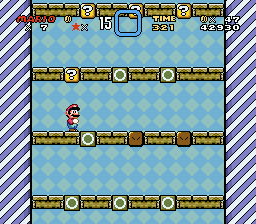
Note: We use the modified Hepburn romanization system in our Japanese to English articles. O's and X'sWhile playing a video game, you may see a circle used to indicate that you did something correctly, or an "X" to indicate failure. In Japan, a small circle is generally used instead of a check mark as a symbol for "yes" or "correct." Mario games that have used this include Mario & Luigi: Bowser's Inside Story, Mario & Luigi: Partners in Time, Super Mario World, Paper Mario, Paper Mario: The Thousand-Year Door, and Yoshi Topsy-Turvy.
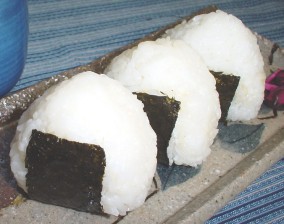
OnigiriThe onigiri, a hand-rolled sushi snack, has snuck into a few Mario games. A triangular onigiri appears as a character in Wrecking Crew '98 and as one of many food items in Super Smash Bros. Melee.
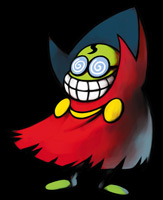
Swirly glassesIn Japanese animation (anime), keep an eye out for glasses with swirly lenses. The swirls mean that the lenses are quite thick, and this implies that the wearer is nerdy. Mario characters with swirly glasses include Professor E. Gadd, Fawful, and Professor Frankly (from Paper Mario: The Thousand-Year Door).
Japan-only Mario gamesSome Mario games were not released in North America. For some reason, most of them are puzzle games. Nintendo probably thought these games would not sell well in America, and to release them would be a waste of time and money. The Japanese version of Super Mario Bros. 2 arrived in America about seven years later (as part of Super Mario All-Stars) because Nintendo thought the game was too challenging. For a list of Japan-only Mario games, please see the Games section. |

Copyright © 1997-2026 TheMushroomKingdom.net
http://themushroomkingdom.net/mariosan.shtml Last modified Tuesday, 17-Jun-2025 17:50:40 CDT